
1. What happened on May 8?
On May 8, 2026, the SEO industry once again went into alert mode. SERP volatility tracking tools started reporting extremely high fluctuations, while website owners noticed sudden visibility shifts almost overnight. For some, this meant strong growth; for others, painful traffic drops — often without any recent changes being made to their websites.
What makes the situation particularly interesting is that the official March 2026 Core Update had only concluded on April 8. In theory, the search landscape should have started stabilizing by now. Instead, Google appears to still be heavily fine-tuning its algorithms. Over the past few weeks, there had already been signs of ongoing turbulence, but May 8 delivered the clearest indication yet that another large-scale recalculation had taken place.
From my observations, Google seems to be partially rolling back its preference for “safe” major brands in favor of smaller, more specialized websites. Following the March 2026 Core Update, large domains gained significant visibility, even when their content lacked depth, originality, or genuine expertise. In many cases, brand authority alone was enough to outrank smaller websites created by actual specialists.
At times, the results became almost absurd. For highly transactional queries, government websites or massive general-interest portals were appearing in top positions despite having little relevance to the user’s actual intent. It was difficult to describe those search results as high quality. Now, however, we are beginning to see signs of a correction. Strong brands still maintain an advantage, but they are increasingly giving way to websites that demonstrate real specialization, experience, and deeper topical expertise.
Honestly, this adjustment was expected — not only by me. Many SEO professionals had been pointing out for weeks that recent algorithm changes were overvaluing domain authority at the expense of actual content quality and relevance. 🚀
2. Community Reactions and SEO Tools
The first warning signs appeared in SEO monitoring platforms. On May 8, tools such as Semrush, Wireboard, and Mozcast began reporting unusually high SERP volatility levels. Their “weather” indicators quickly shifted into the red zone, suggesting that Google was once again heavily recalculating rankings across multiple industries. 📈🔥
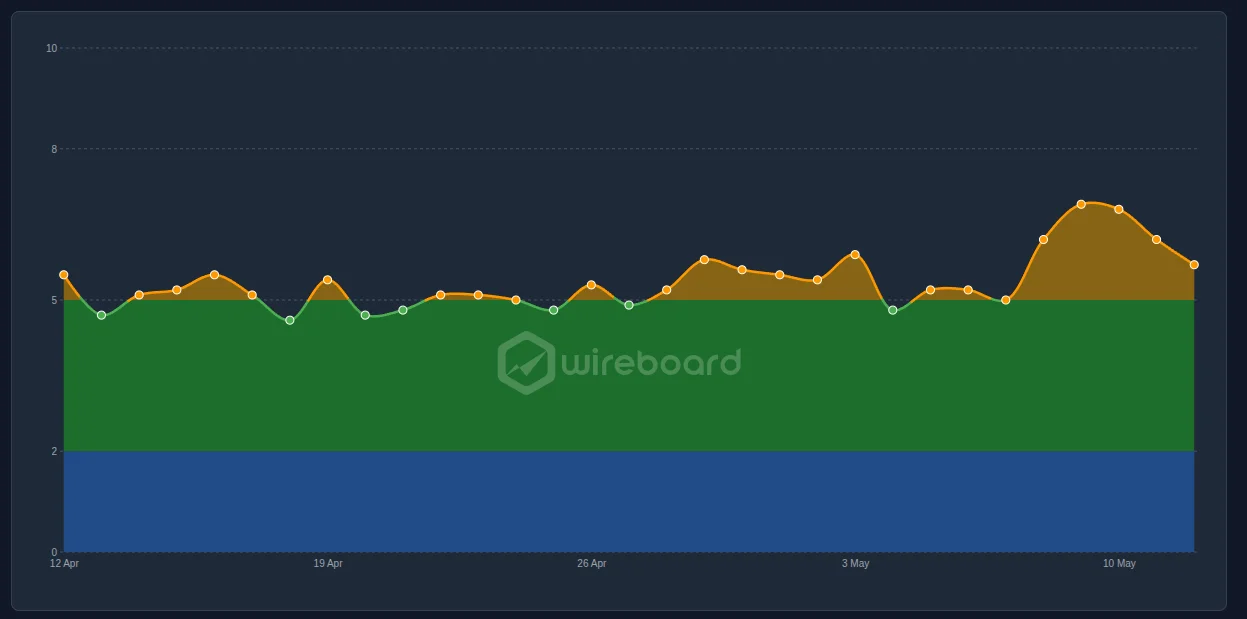
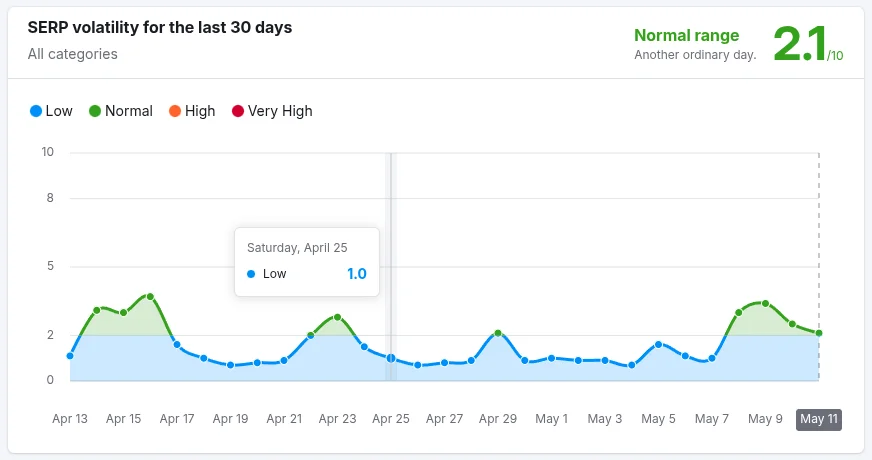
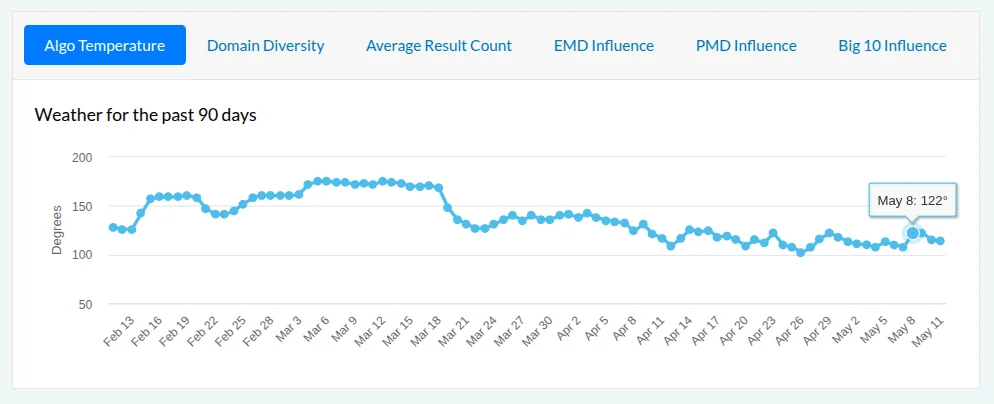
As usual, the SEO community reacted almost immediately. Discussions exploded across forums and especially in the comment sections under posts published by Barry Schwartz. Many site owners described the same pattern: dramatic fluctuations in traffic and conversions that changed literally from hour to hour.
One of the most common observations involved sudden desktop traffic drops combined with simultaneous increases on mobile devices. Some websites lost visibility almost entirely on desktop search while maintaining — or even improving — their mobile rankings. This led many SEOs to speculate that Google may have been testing separate ranking adjustments across device types.
Another recurring theme was the feeling of complete unpredictability. Website owners described the situation as a “rollercoaster”: one day bringing record-breaking sales and traffic, followed by the next day feeling completely dead. For many businesses, the fluctuations were so aggressive that it became nearly impossible to determine whether the issue was seasonal, technical, or algorithmic.
At the same time, several publishers reported a noticeable increase in bot activity. In many cases, server logs showed significantly higher crawling and automated traffic levels, yet conversions remained flat or even declined. This strongly suggests that Google may have been aggressively reprocessing parts of its index during this period rather than simply rolling out minor ranking tweaks.
What makes these discussions especially interesting is how consistent the reports were across different industries. Whether it was affiliate websites, local businesses, SaaS companies, or e-commerce stores, the same keywords kept appearing in conversations: instability, volatility, recalculation, and uncertainty. 🚀
3. A New Direction: Recognition Over Rankings (GEO)
If these changes continue over the coming months, we may finally be looking at a much deeper verification of E-E-A-T principles and the long-discussed concept of Information Gain. Until recently, I was fairly skeptical about Google’s messaging surrounding quality updates. Google representatives and many SEO experts kept talking about rewarding expertise and helpful content, yet in reality the SERPs often showed something completely different.
For months, we watched massive domains dominate rankings simply because of their authority, even when their content lacked originality, practical experience, or genuine value. Meanwhile, smaller niche websites created by real specialists struggled to compete despite offering far more useful information.
Now, however, the direction is slowly becoming clearer.
If this May recalculation is indeed part of a larger adjustment, Google may finally be moving closer to what it has been promising for years: rewarding websites that combine authority with actual expertise rather than relying purely on domain strength.
What becomes especially important in this environment is the combination of two factors:
- a strong and recognizable brand,
- and genuinely deep, experience-based information.
In other words, visibility alone is no longer enough. Websites increasingly need to become recognized sources of knowledge — not only for traditional search rankings, but also for AI-generated answers and citations. 🤖
This is where GEO (Generative Engine Optimization) starts becoming more relevant than traditional SEO discussions. Instead of focusing exclusively on blue-link rankings, publishers are beginning to optimize for discoverability and citation inside AI systems such as Google AI Overviews, ChatGPT, Perplexity, and other generative search experiences.
As a result, new visibility metrics are starting to emerge across the industry. SEO experts increasingly discuss indicators such as:
- Share of Model Voice (SOMV) — measuring how often a brand appears inside AI-generated responses,
- AI Citation Visibility — tracking how frequently websites are referenced by generative search engines and AI assistants,
- topical authority signals connected to entity recognition and semantic expertise.
The future of SEO may therefore become less about “ranking first” and more about becoming the source that AI systems trust enough to quote.
4. Final Thoughts and Advice for Website Owners
For now, the most important advice is simple: don’t panic. Until Google officially confirms another major update, it is better to observe broader trends rather than rushing into aggressive technical changes or redesigns. Volatility periods often create temporary fluctuations that stabilize over time.
Instead of reacting emotionally to every ranking swing, focus on long-term quality signals. The recent changes increasingly favor content that demonstrates real expertise, local relevance, practical experience, and topical depth over generic clickbait or mass-produced SEO pages.
This also means that E-E-A-T is no longer just a theoretical guideline buried in Google documentation. It is becoming visible directly inside the SERPs. Sites that genuinely understand their niche, publish original insights, and solve real user problems appear to be gaining more stability compared to websites relying purely on domain authority or scaled content tactics.
In many ways, this may actually be good news for smaller publishers and independent experts. 🚀
Have you noticed unusual changes in Google Search Console between May 8 and May 11? Were your rankings, traffic, or conversions affected during this volatility spike?